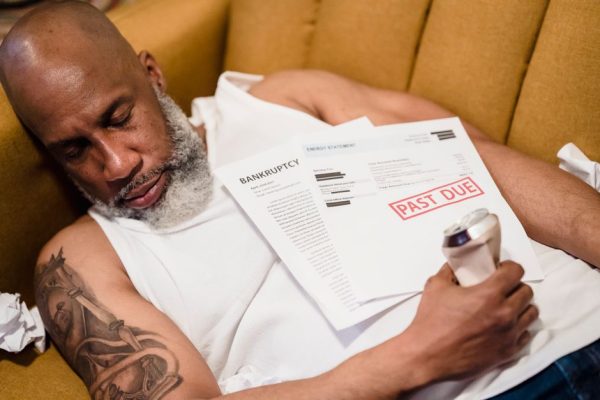
Could paying off $28,000 in credit card debt with your home equity save money, or could it put your house at risk?
That is the question facing Marcus after three years of medical bills, a car repair, and credit card balances that now cost him about $760 each month. His house is worth $410,000, his mortgage balance is $246,000, and a lender says he may qualify for a $60,000 HELOC. The proposed interest rate looks far lower than his cards.
The lower rate is real. So is the risk.
When does a HELOC become too risky for debt consolidation?
My verdict: a HELOC is too risky when the payment only works if your income, home value, and spending habits stay perfect. A debt consolidation loan should create a dependable exit from debt. It should not turn unsecured credit card balances into a claim against your home.
The danger is a change in collateral
Credit card debt can damage your credit score, trigger collections, and lead to lawsuits. A HELOC adds a different consequence: the lender has a lien on your house. If you fall seriously behind, foreclosure becomes part of the risk calculation. The lender does not need to prove that your original spending was irresponsible. It only needs the loan to remain unpaid.
Home prices can also move against you. If your property value falls, the lender may freeze additional draws or reduce the available line. You could lose access to the emergency cash you expected to keep available.
The safest borrower profile
A HELOC makes more sense only when you have steady income, a cash reserve, a fixed payoff schedule, and a plan that prevents new card balances. If you need the line to cover rent, groceries, or another monthly shortfall, consolidation has not solved the problem. It has moved the problem closer to your front door.
How does a HELOC compare with other debt consolidation loans?

The cheapest-looking option is not always the safest option. Compare the collateral, rate behavior, term, and payment shock before comparing the advertised APR.
| Product | Rate or term example | Main advantage | Main risk |
|---|---|---|---|
| U.S. Bank HELOC | 5.95%–10.85% variable APR as of July 6, 2026; 10-year draw period | Lower starting rate and flexible borrowing | Your home secures the balance; payment can rise |
| U.S. Bank home equity loan | 7.15% fixed APR example for a 10-year, $50,000–$99,999 loan at 60% LTV or less | One fixed payment and a known payoff date | Your home still secures the debt |
| SoFi Personal Loan | 6.49%–35.49% fixed APR; $5,000–$100,000; 2–7 years | Unsecured debt with a fixed schedule | Strong borrowers get the best rates; an origination fee may apply |
| Discover Personal Loan | Fixed-rate debt consolidation option; up to 50% of funds may go to your bank account | One payment without using your home as collateral | Loan approval and rate depend on your credit profile |
For a homeowner with excellent credit and stable income, the U.S. Bank home equity loan is safer than its variable HELOC because the rate and payment stay fixed. For someone who cannot accept foreclosure risk, SoFi or Discover is the better starting point, even if the unsecured APR is higher.
Why does a low HELOC rate hide a payment problem?
A HELOC is not simply a cheaper credit card. It is a revolving line tied to your house, and most plans have two distinct stages. During the draw period, you can borrow and repay repeatedly. Some plans allow interest-only payments, which make the first bill look attractive. After the draw period ends, the lender stops new advances and requires principal and interest payments over the remaining repayment term.
The interest-only trap
Imagine a $30,000 balance at 8% APR. An interest-only payment would start near $200 per month. That payment does not reduce the $30,000 principal. If the loan later switches to a 10-year amortizing repayment period at the same rate, the payment would rise to roughly $364 per month. A rate increase would push it higher.
The low first payment can also encourage borrowers to leave the balance untouched. That turns a short-term consolidation move into a long-term home loan. You may save interest compared with a 25% credit card, yet still pay thousands over several years.
Rate changes affect the whole balance
Most HELOCs use an index such as the prime rate plus a lender margin. If the index rises by one percentage point, the interest charge on a $30,000 balance rises by about $25 per month before compounding effects. U.S. Bank states that its HELOC rate can reach 18% APR and charges a $75 annual fee after the first year on some accounts. An early closure fee may also apply.
Ask for the rate ceiling, margin, annual fee, draw-period length, repayment term, and payment at the maximum rate. If the maximum payment would force you to miss mortgage, tax, or insurance bills, the line is too large.
What mistakes make HELOC debt consolidation fail?

Use this sequence before signing a home equity agreement:
- Add every balance first. List card balances, APRs, minimum payments, annual fees, and promotional-rate expiration dates. Do not consolidate a 4% auto loan into a line that can rise to 18%.
- Calculate the break-even rate. Include appraisal costs, title charges, annual fees, and closing costs. A 7% HELOC is not cheaper than a 9% fixed personal loan if fees and payment risk erase the savings.
- Set a payoff date. Divide the balance by the number of months available, then add interest. A $30,000 balance needs more than a token minimum payment. Set an automatic payment that reduces principal every month.
- Remove the spending trigger. Freeze or close the cards after payoff. Keeping $28,000 of newly available credit while adding a HELOC creates two debt problems.
- Stress-test your income. Run the budget with one income reduced by 20%, the HELOC rate at its cap, and a $5,000 home repair. If the payment fails that test, choose unsecured debt counseling or a fixed loan instead.
- Do not use the line as an emergency fund. Keep a separate cash reserve. A lender can reduce or freeze access to unused HELOC credit when your financial situation or property value changes.
The most expensive mistake is treating a lower monthly payment as proof of savings. A longer term can lower the bill while increasing total interest.
Should you choose a HELOC, fixed home loan, or personal loan?
Is a HELOC right for someone with strong credit?
Only if the borrower wants flexibility and can repay the balance on a short schedule. U.S. Bank lists HELOC rates from 5.95% to 10.85% variable APR in a July 2026 range, but the lowest rate assumes strong credit, low loan-to-value, a qualifying credit line, and automatic payments. That advertised rate is not a promise. A fixed home equity loan is the stronger choice for one known balance because it removes rate uncertainty.
When is a personal loan the safer choice?
A SoFi Personal Loan is safer from a collateral standpoint because it does not put your house behind the balance. Its listed fixed APR range runs from 6.49% to 35.49%, with terms from two to seven years and loan amounts from $5,000 to $100,000. Borrowers with high credit card debt but weak home equity should price this option first. The trade-off is simple: a higher payment may buy protection from foreclosure.
What if no loan solves the monthly budget?
Do not borrow against the house to cover a permanent shortfall. A nonprofit credit counseling agency may offer a debt management plan that lowers card interest without creating a lien. A bankruptcy consultation can also be rational when the debt cannot be repaid within a realistic budget. The right answer is the option that ends the debt cycle, not the one with the lowest introductory payment.
What is the safest final decision on HELOC debt consolidation?

Use home equity only when the debt is temporary, the payoff plan is short, and the maximum payment still fits your budget. For a borrower with unstable income, thin savings, or a history of paying off cards and then charging them again, a HELOC is the wrong tool. The lower rate cannot compensate for the loss of housing security.
Marcus should not accept the $60,000 line just because the lender approved it. He should first price a fixed personal loan, call a nonprofit counselor, and test a fixed home equity loan against the payment at the highest possible HELOC rate. If he still chooses home equity, he should borrow only the exact payoff amount, set a fixed monthly principal target, keep an emergency reserve, and close the paid cards.
That answers the question he started with. A HELOC can reduce interest, but it is not a harmless swap. If the plan depends on perfect income and permanent discipline, the home is carrying too much of the risk.